Technology is transforming the way engineers learn, design, and innovate. Among the most impactful innovations are Augmented Reality (AR) and Virtual Reality (VR). These immersive technologies are redefining engineering education by enabling students to visualize complex systems, simulate real-world scenarios, and develop practical skills before entering the workforce.
Today, the demand for a virtual and augmented reality degree program in India is rising rapidly as industries adopt immersive technologies across sectors such as manufacturing, healthcare, aviation, architecture, and gaming. With government initiatives and the growth of the AVGC sector, ARVR courses are becoming an important part of future-focused engineering education.
The Rise of AR/VR in Engineering Education
Engineering has traditionally relied on textbooks, diagrams, and laboratory experiments. However, AR and VR are taking learning to the next level by creating immersive, interactive learning environments.
With AR/VR technologies, engineering students can:
- Visualize complex 3D structures and systems
- Simulate real-world industrial environments
- Perform virtual experiments safely
- Understand concepts faster through interactive visualization
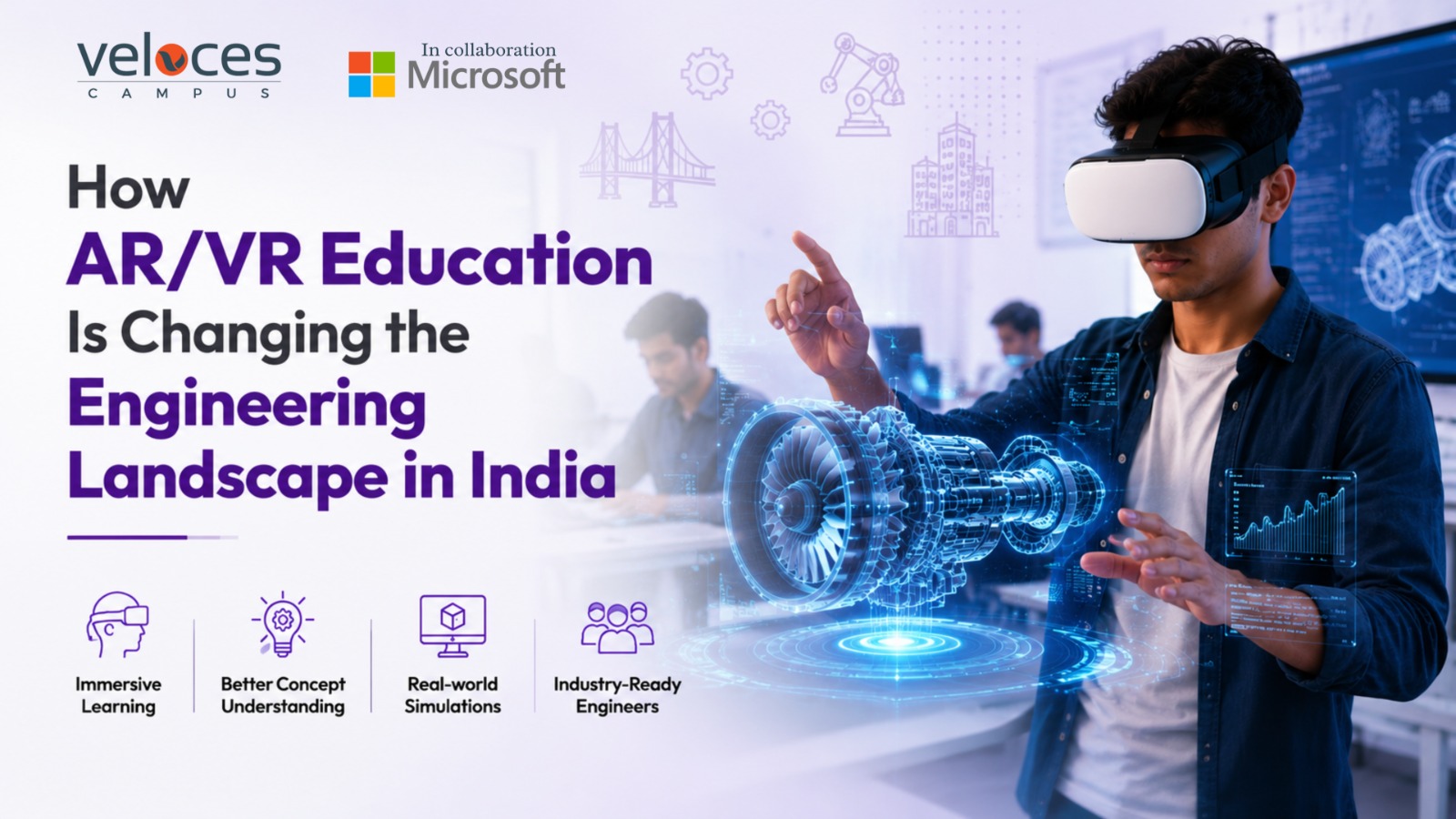
For example, mechanical engineering students can explore internal components of machines in 3D, while civil engineering students can walk through virtual buildings before they are constructed.
The integration of immersive technologies aligns with India’s push for technology-driven education under the National Education Policy (NEP), which promotes emerging technologies such as AI, AR, and VR in academic programs.
Why ARVR Courses Are Important for Future Engineers
The engineering industry is rapidly evolving with digital transformation. Companies are increasingly using Extended Reality (XR) technologies for product design, simulation, training, and remote collaboration.
Some major applications include:
1. Virtual Prototyping
Engineers can create and test product designs in VR before manufacturing physical prototypes. This reduces development time and cost.
2. Immersive Training
Industries such as aerospace, manufacturing, and healthcare use VR simulations to train employees safely in complex environments.
3. Smart Maintenance and Repair
Using AR glasses, technicians can see digital instructions and system information overlaid on real equipment.
4. Collaborative Engineering
Teams across different locations can collaborate in shared virtual environments.
These applications make ARVR courses essential for engineering students who want to build careers in future technologies.
Growth of Virtual and Augmented Reality Degree Programs in India
In recent years, several universities and technology institutes in India have introduced virtual and augmented reality degree programs within engineering disciplines. These programs typically include subjects such as:
- AR/VR Development
- 3D Modeling and Simulation
- Computer Vision
- Game Engine Development
- Human–Computer Interaction
- Immersive User Experience Design
Such programs prepare students for roles like:
- AR/VR Developer
- XR Engineer
- Simulation Engineer
- Game Developer
- Metaverse Architect
As industries continue to invest in immersive technologies, graduates with ARVR specialization are expected to become highly valuable in the job market.
Government Support: AVGC Sector and Union Budget Initiatives
The Indian government has recognized the potential of immersive technologies through the AVGC (Animation, Visual Effects, Gaming, and Comics) sector. This sector includes technologies such as AR, VR, and extended reality, which are expected to create significant employment opportunities in the coming decade.
In the Union Budget 2026, Finance Minister Nirmala Sitharaman announced a major initiative to strengthen the AVGC ecosystem. The government plans to establish AVGC content creator labs in 15,000 secondary schools and 500 colleges across India to develop skills in animation, gaming, and immersive technologies.
The government also allocated ₹250 crore for talent development in the AVGC sector, recognizing its potential as a major driver of India’s digital and creative economy.
According to projections mentioned in the budget, the AVGC industry may require around 2 million skilled professionals by 2030, highlighting the growing demand for immersive technology expertise.
These initiatives aim to bridge the gap between education and industry, encouraging institutions to introduce ARVR courses and immersive technology programs.
The Future of AR/VR Engineering Education in India
India’s engineering education ecosystem is gradually moving toward experiential learning, where students learn by doing rather than memorizing theory. AR and VR will play a crucial role in this transformation.
Future developments may include:
- AR/VR-based virtual laboratories
- Remote immersive classrooms
- Digital twins for engineering training
- Metaverse-based collaborative learning environments
With decreasing hardware costs and increasing accessibility, immersive technology will likely become a standard component of engineering education.
The integration of AR and VR technologies into engineering education is revolutionizing how students learn and innovate. From immersive simulations to virtual prototyping, these technologies enable engineers to gain hands-on experience even before entering the workplace.
As India continues to invest in digital education and the AVGC ecosystem, the demand for virtual and augmented reality degree programs in India will continue to grow. Government initiatives, industry demand, and emerging technologies are collectively shaping a future where ARVR courses become a vital part of engineering education.
For students aspiring to build careers in next-generation technologies, pursuing AR/VR-focused engineering programs can open doors to exciting opportunities in industries that are shaping the future.
Views: 10